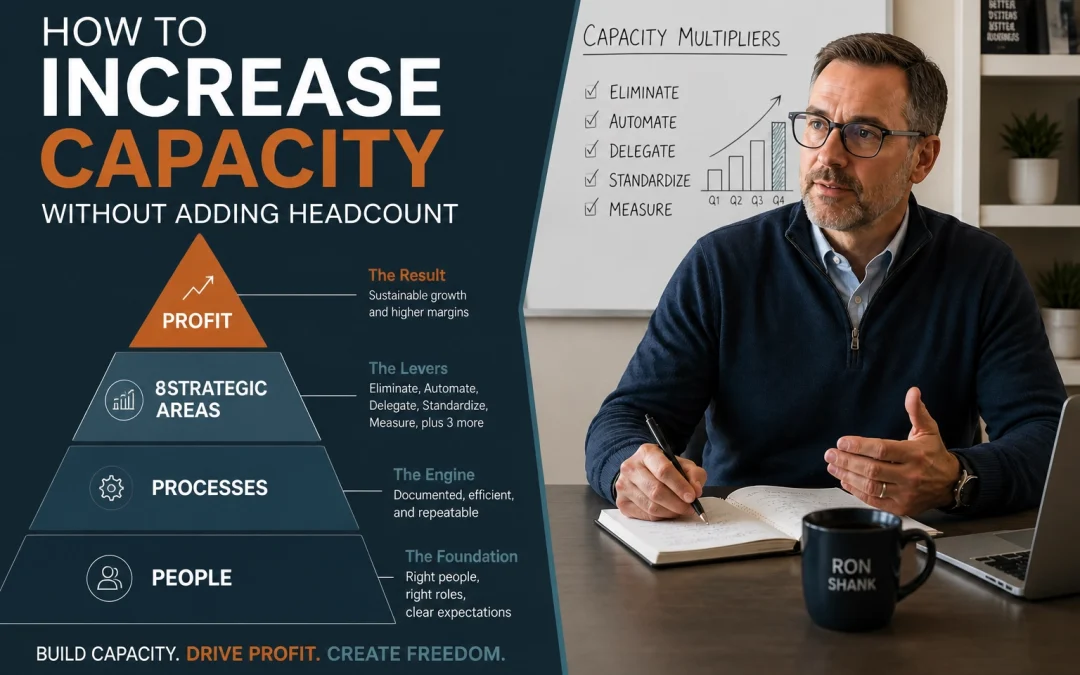
Most business owners believe they need bigger marketing budgets to grow revenue. They assume more ads, more campaigns, and more spending equals more profit.
That's rarely true.
I've worked with hundreds of business owners who've increased profit without additional marketing spend. The leverage is in optimizing the profit drivers you already have.
The Pathway to Profit Framework
The Pathway to Profit breaks down every business into eight areas that affect your bottom line. When you see how these areas work together, you can grow using resources you already have.
Here's the formula that drives everything.
Leads × Conversion Rate × Closing Rate = New Customers
(New Customers + Retained Customers) × Average Dollars Per Sale × Frequency of Sales = Revenue
Revenue – Fixed Costs – Variable Costs = Profit
This framework helps you focus on the drivers that actually move profit.

The 8 Strategic Areas of Profit Growth
1. Lead Generation
Lead generation is about improving the quality and quantity of prospects entering your business. Most owners focus only on getting more leads through expensive advertising.
The smarter approach? Optimize your existing lead sources.
I work with clients to analyze where their best leads come from, such as referrals, website inquiries, networking events, or past customers. Then we double down on those sources without increasing spend.
One simple strategy—systematize your referral process. Ask satisfied customers for introductions. Many owners never ask.
2. Conversion Rate
Your conversion rate measures how many leads turn into actual meetings, presentations, or proposals. If you're getting 100 leads but only converting 10 into meetings, you have a conversion problem.
Small improvements here can create meaningful gains.
Review your lead follow-up process. Respond quickly, use a clear follow-up sequence, and qualify leads. Many businesses lose a large share of potential sales here.
3. Closing Rate
This measures how many meetings or presentations turn into actual customers. If you're meeting with qualified prospects but not closing sales, you're wasting the investment you've already made in lead generation and conversion.
Analyze your sales process. Find where prospects drop off and address common objections early.
Closing rates can improve 30-50% by refining the sales conversation and addressing common objections early.
4. Retention
Keeping existing customers is far less expensive than acquiring new ones. Yet many business owners spend most of their time chasing new business while their best customers slip away.
Focus on why customers leave and what keeps them engaged. Implement regular check-ins, deliver consistent value, and solve problems before they escalate.
Retention improvements compound over time. Even a small increase in customer retention can raise profit, depending on your model.

5. Average Dollars Per Sale
This is the average amount each customer spends per transaction. Most businesses leave money on the table by not properly structuring their offers or presenting additional options.
Review your pricing structure. Offer premium options and make sure customers know your full range. Consider bundling to increase transaction value.
One client increased their average sale by presenting three pricing options instead of one.
6. Frequency of Sales
How often do customers buy from you? Many businesses treat each sale as a one-time transaction instead of building ongoing relationships.
Create systems that bring customers back. This could be scheduled maintenance, regular consultations, or complementary services. The goal is turning one-time buyers into repeat customers.
7. Fixed Cost Reduction
Fixed costs are expenses that don't change with sales volume, such as rent, insurance, salaries, and software subscriptions. Reducing these costs directly improves profit without affecting revenue.
Audit your fixed expenses annually. Cut unused subscriptions and negotiate better rates. Drop services that don't add value.
Even small reductions here flow straight to your bottom line.
8. Variable Cost Reduction
Variable costs change with your sales volume, such as materials, shipping, commissions, and production costs. Reducing these costs increases profit margin on every sale.
Look for ways to improve efficiency, negotiate better supplier terms, or reduce waste in your processes.
How It All Works Together
The real power of this system comes from making small improvements across multiple areas simultaneously.
Here's what happens when a business improves each of the six revenue drivers by just 10% and reduces both cost areas by 10%.
Revenue increases by 36% and profit increases by 56%.
When they improve each area by 40%, revenue increases by 206% and profit increases by 288%.
These are mathematical results based on how the drivers compound.

Real-World Results
One client increased profit by 56% in a year by optimizing these 8 areas. We didn't touch their marketing budget.
They improved their referral system (Lead Generation), created better follow-up sequences (Conversion Rate), refined their sales presentations (Closing Rate), implemented customer success programs (Retention), restructured their pricing (Average Dollars Per Sale), developed maintenance contracts (Frequency), renegotiated vendor contracts (Fixed Costs), and improved operational efficiency (Variable Costs).
No additional advertising. No expensive marketing campaigns. Just systematic optimization of what already existed.
Getting Started
Begin by measuring your current performance in each area. You can't improve what you don't measure.
Calculate your conversion rates, closing rates, average sale amounts, and customer frequency. Identify your fixed and variable costs. Look for the areas with the biggest opportunities for improvement.
Focus on 2-3 areas initially rather than trying to fix everything at once. Small, consistent improvements compound over time.
The complete Pathway to Profit system, including worksheets and calculators, is available in my free book at shankcoaching.com.
The Pathway to Profit isn't about spending your way to growth. It's about building a systematically better business using the resources you already have.